
deathrowtoll
Member
Fellow 5th scalers,
I have been reading many of your postings and have enjoyed every one of them. I feel compelled to share some of my experiences and thoughts with you. I have been a basher/racer for over 20 years and have used almost any vehicle available in all scales of our hobby, but for me 5th scale rocks.
I want to contribute with a little essay about clutches. It is going to be somewhat winded so I will split it into 2 chapters: I need to warn you that this info is purely my opinions or views on the subject of clutches.
I am not an expert, but have quite a bit of real life experience with them. I am sure others have their own opinions about what I am going to write about, and I will definitely respect their informed opinion and hopefully I will learn from any diverging or conflicting comments/postings, after all I am here to also learn and enjoy our hobby. I will try to use layman terms to simplify things, so please do not flame me when I do not use all known technical terms.
We use very similar technology as chain saws and weed eaters do. Matter of fact, if it wasn't for adjustable clutches; we would use the exact same concepts.
How it works 1: (from http://www.howstuffworks.com/clutch.htm)
To understand how a clutch works, it helps to know a little bit about friction, which is a measure of how hard it is to slide one object over another. Friction is caused by the peaks and valleys that are part of every surface -- even very smooth surfaces still have microscopic peaks and valleys. The larger these peaks and valleys are, the harder it is to slide the object.
In a car, you need a clutch because the engine spins all the time, but the car's wheels do not. In order for a car to stop without killing the engine, the wheels need to be disconnected from the engine somehow. The clutch allows us to smoothly engage and disengage a spinning engine to a non-spinning transmission by controlling the slippage between them.
How it works 2: (from http://auto.howstuffworks.com/clutch3.htm)
Gas-powered chain saws and weed eaters have centrifugal clutches, so that the chains or strings can stop spinning without you having to turn off the engine.
These clutches work automatically through the use of centrifugal force. The input is connected to the engine crankshaft. The output can drive a chain, belt, driving gears or a shaft. As the rotations per minute increase, weighted arms swing out and force the clutch to engage. Centrifugal clutches are also often found in lawn mowers, go-karts, mopeds, mini-bikes and of course our rides. Even some yo-yos are manufactured with centrifugal clutches.
5th scale cars:
As we saw above our clutches are basically the same as the ones used by weed eater's. but we need to tune them for the specific purposes we use them for, so we need to establish what we can do to tune them. We will call these tuning elements Clutch Variables.
Clutch Variables:
- Weight of the weighted arms and shoe pads.
- Material the shoe pads are made of (friction component A)
- Material the clutch bells are made of (friction component B)
- Spring rates the weighted arms and shoe pads work against (friction controller A)
- Rpm's we get from our gas mills (friction controller B)
- Motor torque available at the time of clutch engagement
- Final gear ratio of vehicle
- Ambient temperature
- Atmospheric pressure/Dew point (this is a stretch, but I have seen its effects in competition)
Simply stated the ideal situation would be to engage the clutch at any time we feel the motor should drive our cars forward. It also would make sense to engage the clutch when the motor has the right amount of power/torque for our specific purposes/demands.
To simplify this discussion we will concentrate in the 4 easiest/cheapest tuning elements
- Material the shoe pads are made of (friction component A)
- Material the clutch bells are made of (friction component B)
- Spring rates the weighted arms and shoe pads work against (friction controller A)
- Rpm's we get from our gas mills (friction controller B)
Lets start with Spring rates (friction controller A) and Rpm's we get from our gas mills (friction controller B), I will also sprinkle the discussion with Power and Torque terms.
- For these Clutch variable there are two feedback points
1. When the clutch starts to engage
2. When the clutch is fully engaged
The 6000 RPM Myth:
There is sort of a myth out there about what is the best RPM to start engaging a clutch, and what is the best RPM to fully engage the clutch. People feel that 6000 rpm are too little rpm to start engaging the clutch, and feel that a stronger spring (higher spring rate) can give them a better response (more punch), and to a certain extent they are right. However this assumption is right only if all of our motors would give out the same torque/horsepower when starting to engage at 6000 rpm or when fully engaged at 8500 rpm.
Let me illustrate the discrepancy; I will use horsepower (hp) for this illustration, and will assume I have all the gearing options in the world to compensate and achieve similar Final gear ratios:
I have the following motors available to me:
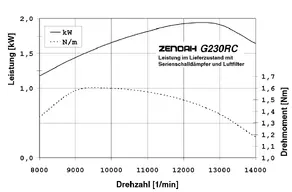
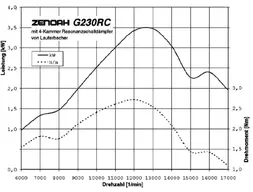
Motor #1 delivers a peak HP of 2.5 HP at 18000 rpm, 1.8 HP at 10500 rpm, 1.2 HP at 8000 rpm and 0.7 HP at 6000 rpm.
Motor #2 delivers a peak HP of 4.0 HP at 18000 rpm, 2.8 HP at 10500 rpm, 1.6 HP at 8000 rpm and 1.0 HP at 6000 rpm.
Motor #3 delivers a peak HP of 5.0 HP at 18000 rpm, 3.0 HP at 10500 rpm, 1.8 HP at 8000 rpm and 1.4 HP at 6000 rpm.
Hypothetically my heavy truck needs at least 1.0 HP to start moving with enough punch and 1.6 HP or more to be competitive when the clutch is fully engaged. All three motors can supply me with what I need, but I need to select an appropriate motor/clutch combination.
To save money I choose motor #1 and a clutch with spring rate that allows me to start engaging at 8000 RPM and fully engages at 10500 RPM. After practicing some, I realize that when my clutch engages the tires spin out of control and I lose too much time being gentle with how I apply the throttle to my truck.
After more practice and after using some Russian math; I come to the conclusion that if I could get only 1.0 HP when I start to engage the clutch my tires will not spin and act as if I have a limited slip setup; It becomes clear that to solve my problem I need to install Motor # 2 with a clutch with spring rate that allows me to start engaging at 6000 RPM and fully engages at 8500 RPM.
Notice Motor #3 will give me problems regardless of what permanent spring rate I use (this is where adjustable clutches really shine as they can be adjusted to the extreme from 1000 to 18000 rpm)
I have seen the above situation many times, especially when people with dissimilar engines are trying to obtain the same results by simply copying each other clutch setups. I feel this puts the 6000 RPM Myth above into the right perspective. Sometimes it is true, sometimes it is not.
Practical application:
For practical purposes our heavy 1/5 scale cars do benefit using the following spring setups, especially when using stock motors:
http://www.rampagehopups.com/product.sc?categoryId=5&productId=334 = $8.00 = High Response Clutch Spring Set
http://www.davesmotors.com/s.nl/c.885035/n.1/it.A/id.60/.f = 32.00 = High Response Clutch Shoe & Spring Set
End of chapter 1 of 2......
DRT.
I have been reading many of your postings and have enjoyed every one of them. I feel compelled to share some of my experiences and thoughts with you. I have been a basher/racer for over 20 years and have used almost any vehicle available in all scales of our hobby, but for me 5th scale rocks.
I want to contribute with a little essay about clutches. It is going to be somewhat winded so I will split it into 2 chapters: I need to warn you that this info is purely my opinions or views on the subject of clutches.
I am not an expert, but have quite a bit of real life experience with them. I am sure others have their own opinions about what I am going to write about, and I will definitely respect their informed opinion and hopefully I will learn from any diverging or conflicting comments/postings, after all I am here to also learn and enjoy our hobby. I will try to use layman terms to simplify things, so please do not flame me when I do not use all known technical terms.
We use very similar technology as chain saws and weed eaters do. Matter of fact, if it wasn't for adjustable clutches; we would use the exact same concepts.
How it works 1: (from http://www.howstuffworks.com/clutch.htm)
To understand how a clutch works, it helps to know a little bit about friction, which is a measure of how hard it is to slide one object over another. Friction is caused by the peaks and valleys that are part of every surface -- even very smooth surfaces still have microscopic peaks and valleys. The larger these peaks and valleys are, the harder it is to slide the object.
In a car, you need a clutch because the engine spins all the time, but the car's wheels do not. In order for a car to stop without killing the engine, the wheels need to be disconnected from the engine somehow. The clutch allows us to smoothly engage and disengage a spinning engine to a non-spinning transmission by controlling the slippage between them.
How it works 2: (from http://auto.howstuffworks.com/clutch3.htm)
Gas-powered chain saws and weed eaters have centrifugal clutches, so that the chains or strings can stop spinning without you having to turn off the engine.
These clutches work automatically through the use of centrifugal force. The input is connected to the engine crankshaft. The output can drive a chain, belt, driving gears or a shaft. As the rotations per minute increase, weighted arms swing out and force the clutch to engage. Centrifugal clutches are also often found in lawn mowers, go-karts, mopeds, mini-bikes and of course our rides. Even some yo-yos are manufactured with centrifugal clutches.
5th scale cars:
As we saw above our clutches are basically the same as the ones used by weed eater's. but we need to tune them for the specific purposes we use them for, so we need to establish what we can do to tune them. We will call these tuning elements Clutch Variables.
Clutch Variables:
- Weight of the weighted arms and shoe pads.
- Material the shoe pads are made of (friction component A)
- Material the clutch bells are made of (friction component B)
- Spring rates the weighted arms and shoe pads work against (friction controller A)
- Rpm's we get from our gas mills (friction controller B)
- Motor torque available at the time of clutch engagement
- Final gear ratio of vehicle
- Ambient temperature
- Atmospheric pressure/Dew point (this is a stretch, but I have seen its effects in competition)
Simply stated the ideal situation would be to engage the clutch at any time we feel the motor should drive our cars forward. It also would make sense to engage the clutch when the motor has the right amount of power/torque for our specific purposes/demands.
To simplify this discussion we will concentrate in the 4 easiest/cheapest tuning elements
- Material the shoe pads are made of (friction component A)
- Material the clutch bells are made of (friction component B)
- Spring rates the weighted arms and shoe pads work against (friction controller A)
- Rpm's we get from our gas mills (friction controller B)
Lets start with Spring rates (friction controller A) and Rpm's we get from our gas mills (friction controller B), I will also sprinkle the discussion with Power and Torque terms.
- For these Clutch variable there are two feedback points
1. When the clutch starts to engage
2. When the clutch is fully engaged
The 6000 RPM Myth:
There is sort of a myth out there about what is the best RPM to start engaging a clutch, and what is the best RPM to fully engage the clutch. People feel that 6000 rpm are too little rpm to start engaging the clutch, and feel that a stronger spring (higher spring rate) can give them a better response (more punch), and to a certain extent they are right. However this assumption is right only if all of our motors would give out the same torque/horsepower when starting to engage at 6000 rpm or when fully engaged at 8500 rpm.
Let me illustrate the discrepancy; I will use horsepower (hp) for this illustration, and will assume I have all the gearing options in the world to compensate and achieve similar Final gear ratios:
I have the following motors available to me:
Motor #1 delivers a peak HP of 2.5 HP at 18000 rpm, 1.8 HP at 10500 rpm, 1.2 HP at 8000 rpm and 0.7 HP at 6000 rpm.
Motor #2 delivers a peak HP of 4.0 HP at 18000 rpm, 2.8 HP at 10500 rpm, 1.6 HP at 8000 rpm and 1.0 HP at 6000 rpm.
Motor #3 delivers a peak HP of 5.0 HP at 18000 rpm, 3.0 HP at 10500 rpm, 1.8 HP at 8000 rpm and 1.4 HP at 6000 rpm.
Hypothetically my heavy truck needs at least 1.0 HP to start moving with enough punch and 1.6 HP or more to be competitive when the clutch is fully engaged. All three motors can supply me with what I need, but I need to select an appropriate motor/clutch combination.
To save money I choose motor #1 and a clutch with spring rate that allows me to start engaging at 8000 RPM and fully engages at 10500 RPM. After practicing some, I realize that when my clutch engages the tires spin out of control and I lose too much time being gentle with how I apply the throttle to my truck.
After more practice and after using some Russian math; I come to the conclusion that if I could get only 1.0 HP when I start to engage the clutch my tires will not spin and act as if I have a limited slip setup; It becomes clear that to solve my problem I need to install Motor # 2 with a clutch with spring rate that allows me to start engaging at 6000 RPM and fully engages at 8500 RPM.
Notice Motor #3 will give me problems regardless of what permanent spring rate I use (this is where adjustable clutches really shine as they can be adjusted to the extreme from 1000 to 18000 rpm)
I have seen the above situation many times, especially when people with dissimilar engines are trying to obtain the same results by simply copying each other clutch setups. I feel this puts the 6000 RPM Myth above into the right perspective. Sometimes it is true, sometimes it is not.
Practical application:
For practical purposes our heavy 1/5 scale cars do benefit using the following spring setups, especially when using stock motors:
http://www.rampagehopups.com/product.sc?categoryId=5&productId=334 = $8.00 = High Response Clutch Spring Set
http://www.davesmotors.com/s.nl/c.885035/n.1/it.A/id.60/.f = 32.00 = High Response Clutch Shoe & Spring Set
End of chapter 1 of 2......
DRT.